
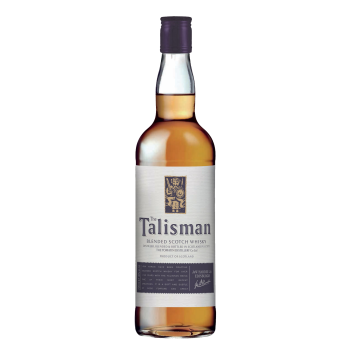
Made with Whisky
Cocktails with Whisky
Whisky or whiskey is a type of distilled alcoholic beverage made from fermented grain mash. Various grains (which may be malted) are used for different varieties, including barley, corn (maize), rye, and wheat. Whisky is typically aged...
Open this page when whisky is one of the ingredients already on hand and you want drinks where it is doing real work, not just showing up in the background.
Read full ingredient background
Whisky or whiskey is a type of distilled alcoholic beverage made from fermented grain mash. Various grains (which may be malted) are used for different varieties, including barley, corn (maize), rye, and wheat. Whisky is typically aged in wooden casks, generally made of charred white oak. Whisky is a strictly regulated spirit worldwide with many classes and types. The typical unifying characteristics of the different classes and types are the fermentation of grains, distillation, and aging in wooden barrels. The word whisky (or whiskey) is an anglicisation of the Classical Gaelic word uisce (or uisge) meaning "water" (now written as uisce in Irish Gaelic, and uisge in Scottish Gaelic). Distilled alcohol was known in Latin as aqua vitae ("water of life"). This was translated to Classical Gaelic as Irish: uisce beatha/Scottish Gaelic: uisge beatha "water of life". Early forms of the word in English included uskebeaghe (1581), usquebaugh (1610), usquebath (1621), and usquebae (1715). It is possible that distillation was practised by the Babylonians in Mesopotamia in the 2nd millennium BC, with perfumes and aromatics being distilled, but this is subject to uncertain and disputed interpretation of evidence. The earliest certain chemical distillations were by Greeks in Alexandria in the 1st century AD, but these were not distillations of alcohol. The medieval Arabs adopted the distillation technique of the Alexandrian Greeks, and written records in Arabic begin in the 9th century, but again these were not distillations of alcohol. Distilling technology passed from the medieval Arabs to the medieval Latins, with the earliest records in Latin in the early 12th century. The earliest records of the distillation of alcohol are in Italy in the 13th century, where alcohol was distilled from wine. An early description of the technique was given by Ramon Llull (1232 – 1315). Its use spread through medieval monasteries, largely for medicinal purposes, such as the treatment of colic and smallpox. The art of distillation spread to Ireland and Scotland no later than the 15th century, as did the common European practice of distilling "aqua vitae" or spirit alcohol primarily for medicinal purposes. The practice of medicinal distillation eventually passed from a monastic setting to the secular via professional medical practitioners of the time, The Guild of Barber Surgeons. The earliest Irish mention of whisky comes from the seventeenth-century Annals of Clonmacnoise, which attributes the death of a chieftain in 1405 to "taking a surfeit of aqua vitae" at Christmas. In Scotland, the first evidence of whisky production comes from an entry in the Exchequer Rolls for 1494 where malt is sent "To Friar John Cor, by order of the king, to make aquavitae", enough to make about 500 bottles. A still for making whisky is usually made of copper, since it removes sulfur-based compounds from the alcohol that would make it unpleasant to drink. Modern stills are made of stainless steel with copper innards (piping, for example, will be lined with copper along with copper plate inlays along still walls). The simplest standard distillation apparatus is commonly known as a pot still, consisting of a single heated chamber and a vessel to collect purified alcohol. Column stills are frequently used in the production of grain whisky and are the most commonly used type of still in the production of bourbon and other American whiskeys. Column stills behave like a series of single pot stills, formed in a long vertical tube. Whereas a single pot still charged with wine might yield a vapour enriched to 40–50% alcohol, a column still can achieve a vapour alcohol content of 95.6%; an azeotropic mixture of alcohol and water.
What to make
Drinks built around whisky.
Start with the top cards if you just want the clearest examples, then filter when you want to push toward a different spirit, style, or level of effort.
Results
1 cocktails
Follow the flavor
Lead with the flavor in your head and let the right lane answer back.
This is the better route when taste matters more than bottle choice. Each card leans into a distinct flavor mood rather than a rigid spirit category.

Citrus with lift
Bright, brisk drinks with snap, freshness, and the kind of finish that keeps the whole glass feeling awake.
See the bright, fizzy side
Orange afterglow
Rounder, juicier drinks that land softer and easier - less snap, more glow, more instant appeal.
Open the softer citrus picks
Tropical side trip
Softer, sweeter, and more playful - the lane for beach-leaning flavors, warmer energy, and a little escapism.
Take the tropical detourTry it another way
These next steps help if you want to widen back out from one ingredient to a bottle, a broader lane, or the strongest all-rounders.